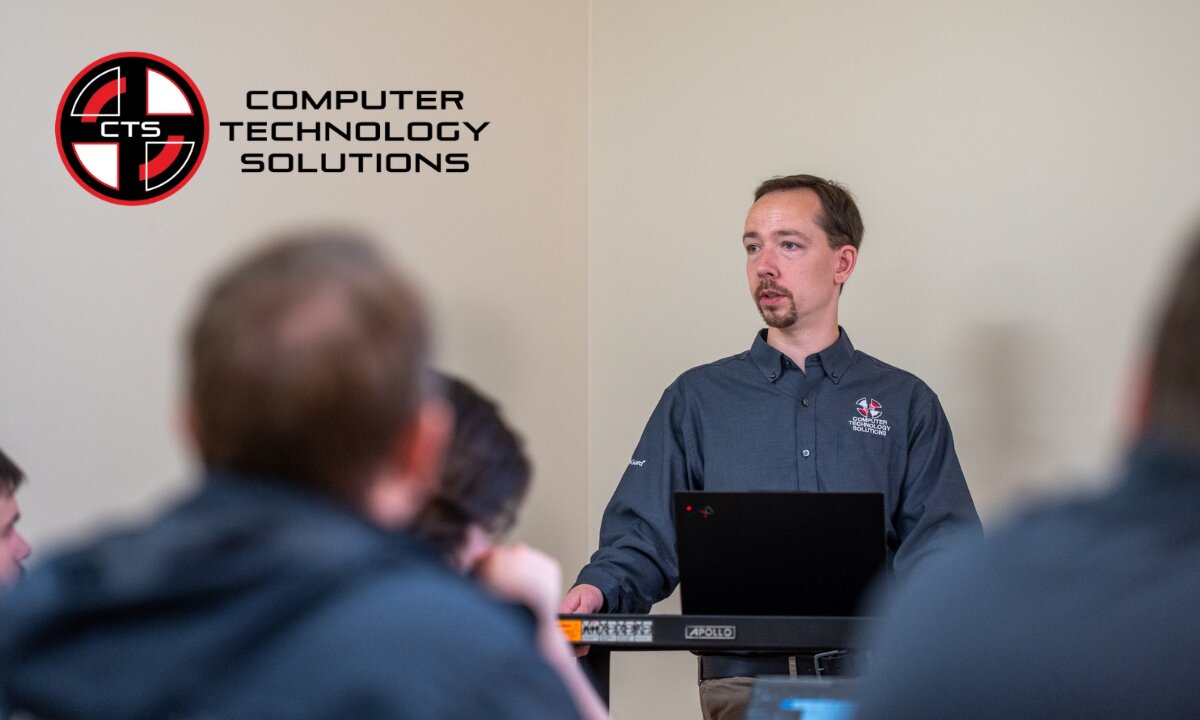
A year-end note from Xachary Dinsmore, CEO of Computer Technology Solutions
As we head into the final weeks of 2026, there’s no shortage of conversation about what’s next in technology. AI is changing how people work, cybersecurity threats continue to evolve, and businesses are being presented with new tools that promise to make them faster and more efficient.
It’s exciting, but it can also be overwhelming, especially for small business owners who have a hundred other things on their plates.
My advice heading into 2027? Before you start investing in the next big thing, make sure you’re getting the most out of what you already have.
You might be surprised by how much opportunity, and how much risk, is sitting in your existing technology environment.
AI isn’t going anywhere. But you don’t need to rush.
If there’s one technology conversation I expect to continue well into 2027, it’s artificial intelligence.
AI has real potential to help small businesses. Whether it’s reducing repetitive administrative work, helping employees find information faster, or improving everyday workflows, there are practical applications worth exploring.
But I also see businesses feeling pressure to adopt AI simply because everyone else seems to be doing it.
That’s not a strategy.
Before investing in another AI tool, I’d encourage business owners to ask a few questions. What problem are we trying to solve? Will this actually save our employees time? What information will the tool have access to? And do we have guidelines in place for how employees should use it?
That last question is especially important. There’s a good chance some of your employees are already using AI tools, whether you’ve formally introduced them or not.
You don’t necessarily need an elaborate AI strategy to start 2027. But you should have a basic acceptable use policy, understand where your business data is going, and identify one or two practical opportunities where AI could provide measurable value.
Start small. Get it right. Then expand.
Cybersecurity is getting more complicated, but the basics still matter.
AI is also changing the cybersecurity landscape. Phishing emails are becoming more convincing, impersonation attempts are harder to spot, and attackers have new tools at their disposal.
But here’s something I think gets overlooked: Many of the security problems businesses face still come down to the fundamentals.
Are employees using multi-factor authentication? Are former employees’ accounts being disabled? Are systems receiving security updates? Are firewall configurations being reviewed? Are vulnerabilities being identified and addressed?
These aren’t particularly exciting topics. They don’t make headlines the way AI does.
But they’re the things that help keep your business running.
One of the biggest misconceptions I encounter is that if a business has an IT provider, all of these things must be getting done.
Unfortunately, that’s not always the case.
Having cybersecurity tools and knowing they’re properly configured, monitored, and maintained are two very different things.
As you plan for 2027, I’d encourage you to ask your IT team or provider what they’re doing behind the scenes to protect your business. They should be able to give you a clear answer.
Don’t assume your backups are working.
If I could encourage every business owner to verify one thing before the end of the year, backups would be near the top of my list.
We regularly encounter environments where businesses believe their data is being backed up, only to discover that backups aren’t running properly, don’t cover everything they should, or haven’t been tested.
Imagine coming back from the holidays and finding that your business can’t access critical files or applications.
Would you know how quickly you could recover? Would you know how much data you might lose?
Those are questions worth answering before something happens, not during an emergency.
Ask your IT provider when your backups were last successfully tested and whether all your critical systems are included.
It’s a simple conversation that can reveal some pretty significant gaps.
Your technology budget should reflect where your business is going.
December is also a good time to look at the bigger picture.
Maybe you’re planning to hire next year. Maybe you’re considering a new software platform, expanding your office, or finding ways to make your team more productive.
Your technology plan should support those goals.
Rather than waiting until equipment fails or software becomes a problem, look at what may need to be replaced, upgraded, or consolidated in the coming year.
You may even find opportunities to save money. Businesses often accumulate software subscriptions they no longer use or pay for tools with overlapping functionality.
And before purchasing something new, make sure you understand what capabilities you already have.
Technology spending shouldn’t just be about keeping the lights on. It should help your business operate better.
Five things I’d do before January 1
If you’re looking for a practical place to start, here’s what I’d prioritize during the final weeks of 2026:
- Verify your backups. Confirm that critical systems and data are protected and that recovery has been successfully tested.
- Review your cybersecurity basics. Check multi-factor authentication, employee access, security updates, and any outstanding vulnerabilities.
- Establish some AI ground rules. Make sure employees understand which AI tools are approved and what business information should never be entered into unapproved platforms.
- Review your technology spending. Identify unused software, aging equipment, and investments you’ll need to plan for in 2027.
- Have a technology planning conversation. Ask your IT provider what concerns them most about your current environment and what they’d prioritize improving next year.
You don’t have to solve everything in December. The important thing is knowing where you stand and having a plan.
A final thought heading into 2027
I think 2027 will bring some exciting opportunities for small businesses, particularly as AI becomes more practical and accessible.
But the businesses that benefit most won’t necessarily be the ones adopting every new tool. They’ll be the ones making thoughtful decisions, protecting their information, and building on a solid technology foundation.
That’s something we believe strongly at CTS. Technology should make running your business easier, not introduce more uncertainty.
As you wrap up 2026, take a little time to ask questions about your current IT environment. Even if everything seems to be working fine, it’s worth understanding what’s happening behind the scenes.
Here’s to a productive, secure, and successful 2027.
Xachary (Xac) Dinsmore
CEO, Computer Technology Solutions

